
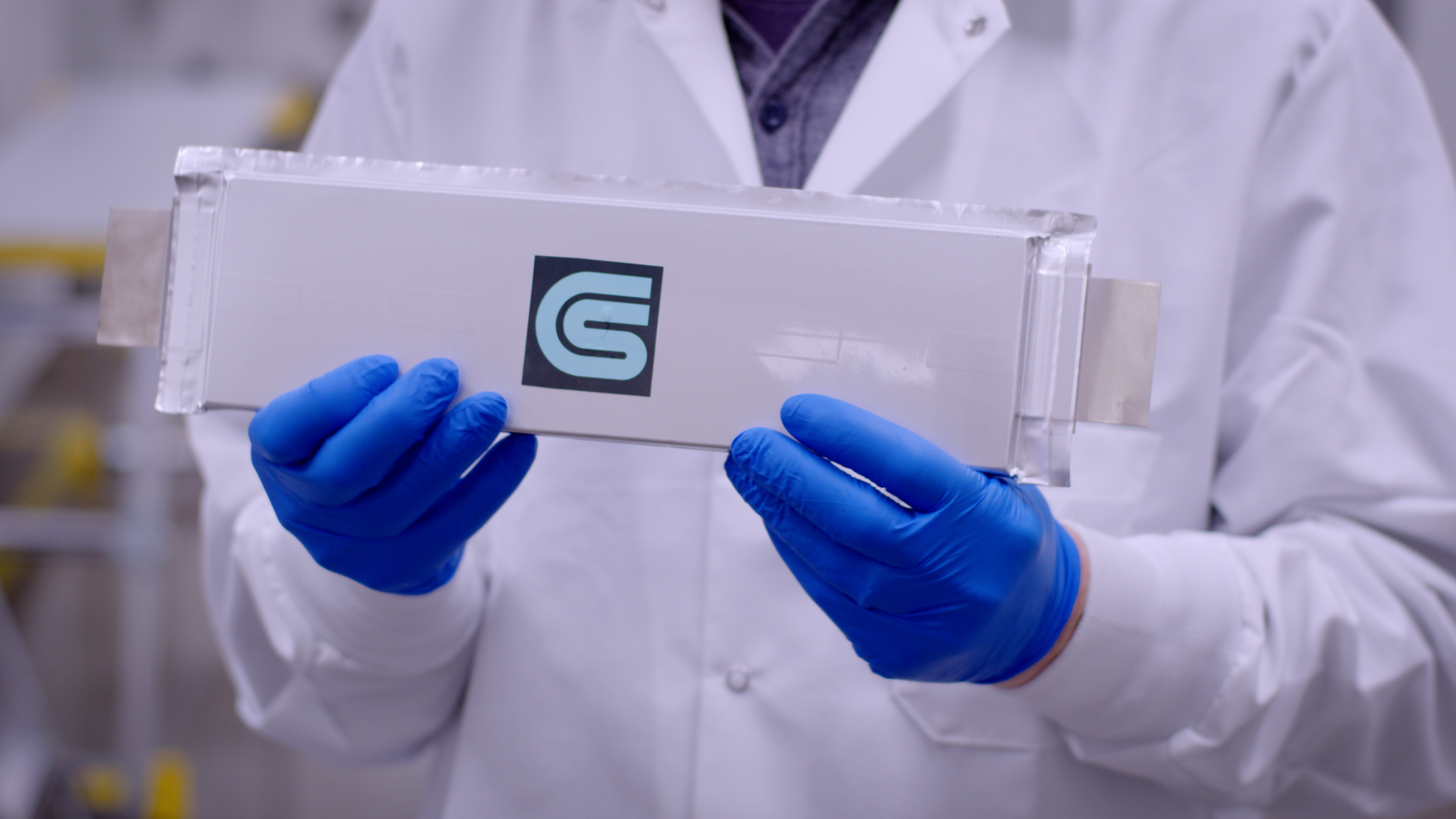


The cathode active material is the single most expensive component in a lithium-ion battery cell, and it helps determine the battery’s energy density, cycle life, safety and cost. Despite its critical importance, cathode active material has been one of the least resilient components in the battery supply chain. This has created significant bottlenecks and vulnerabilities for North American battery manufacturers and OEMs that require batteries in their systems.
Many defense systems, commercial and passenger EVs, and other storage systems (BESS) today rely on batteries with lithium iron phosphate (LFP) cathodes because they're safe, durable, and long-lasting. Unfortunately, China has near monopoly control of the global supply of LFP.
Today, Coreshell is proud to announce a long term supply chain agreement with L&F Ltd. Co, to source LFP material outside of China.
With this agreement in place and with our strategic partnership with Ferroglobe in place, Coreshell is now the only company to have scalably solved the Chinese domination of critical minerals in both the cathode and the anode. Coreshell’s anode already completely supplants Chinese graphite with metallurgical silicon, a commodity material already mass-produced in Alabama and Ohio.
But the anode is only half the challenge in making batteries compliant with NDAA and avoiding materials from Foreign Entities of Concern (FEOC).
The L&F Agreement
Coreshell announced today that we signed an eight-year supply agreement with L&F Co., Ltd., one of the world's largest producers of LFP cathode active materials. Based in South Korea, L&F manufactures these materials at commercial scale without relying on China.
Combined with Coreshell's U.S.-sourced silicon anode, this gives customers access to a battery completely free of FEOC-sourced materials.
The length of the agreement matters, too. Battery programs for defense, EVs, and other OEMs take years to qualify and launch. Customers need confidence that critical materials will be available for the long term - not just for the next year or two. An eight-year agreement provides that certainty.
NDAA Compliance Requires Batteries Free of Chinese Components
FEOC compliance is becoming a requirement, not a future goal. For US defense purchasers, the NDAA requires FEOC-free systems by next year.
For defense customers, Coreshell’s agreements with L&F for the cathode materials and Ferroglobe for the anode materials means a battery supply chain that can be traced from raw materials to finished cells, making it easier to demonstrate FEOC compliance.
For EV and energy storage manufacturers, this provides access to a battery supply chain that addresses both the anode and cathode, making it easier to build batteries that meet evolving FEOC requirements and best practices.
South Korea is not a Foreign Entity of Concern under U.S. policy. That means L&F's cathode materials meet today's FEOC requirements, including those in the NDAA, OBBB and U.S. Department of War sourcing standards.
What’s Next
There's still more work to do. Battery supply chains are continuing to move closer to home, and FEOC requirements will continue to evolve.
Coreshell is building for that future with long-term supply agreements, domestic sourcing where it matters most, and batteries that exceed performance standards.
We'll share more about the applications and programs powered by the Coreshell Battery in the months ahead.
To learn more about our NDAA-compliant batteries, please contact silicon@coreshell.com


