


As the United States works to rebuild its industrial base and strengthen supply chain resilience, one vulnerability remains largely unchanged: the batteries powering many of our most critical systems still depend on Chinese materials. No matter where they’re assembled, the graphite that composes virtually every lithium-ion battery anode on the market is processed entirely in China.
The good news is this isn't a technology problem. We know how to make better batteries. The real challenge is building a supply chain that isn't dependent on China.
Silicon Is the Answer. But Not All Silicon Is Equal
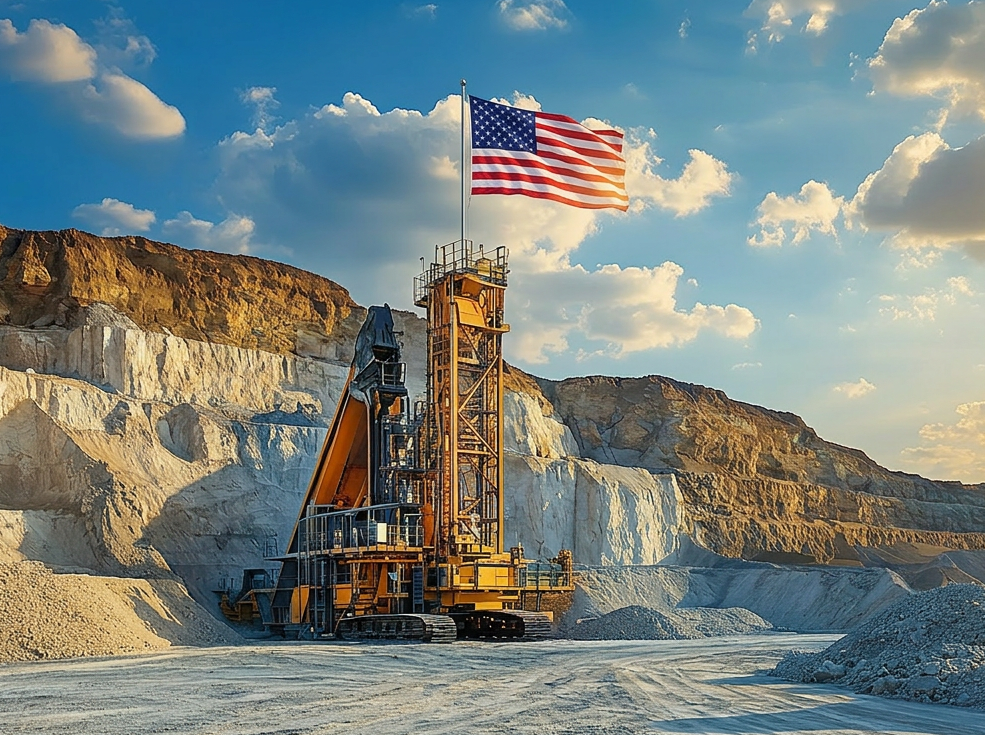
At Coreshell, we use metallurgical silicon as the primary anode material, sourced from U.S.-mined quartz and sand, rather than relying on conventional graphite-dominant anode designs. We source that silicon from Ferroglobe, the only fully integrated domestic producer of metallurgical silicon in America, with mining, processing, and production all happening on U.S. soil. That kind of end-to-end domestic visibility is exactly what defense procurement requires, and it's what makes this supply chain verifiable, not just claimable.
Some silicon anode approaches depend on specially engineered synthetic materials that require costly new manufacturing methods and establishment of new supply chains to achieve scale. Coreshell takes a simpler, more scalable approach, using a form of silicon that already fits into existing U.S. industrial infrastructure, with no re-tooling required for adoption.
Silicon also materially outperforms Chinese graphite in the anode, providing a 30% increase in energy density over graphite, which meaningfully reduces battery weight and size. For a military drone, that's longer flight time and a lighter payload. For an autonomous ground vehicle, that's extended range in the field. For a soldier carrying equipment, that means getting the same power while carrying less weight.
The Graphite Dependency
When people talk about reducing dependence on China in the battery supply chain, the conversation usually stops at the cell or pack level. But the anode inside is where the real exposure lives. Graphite, the material inside the anode of almost every lithium-ion battery, is overwhelmingly processed in China, which controls roughly over 90 percent of global graphite processing capacity. That means even when a battery is manufactured in the United States, one of its most critical components still traces back to China.
For consumer electronics, that's a business risk. But for defense, it's a national security problem.
NDAA Section 842 is transforming this concern into action.. Defense manufacturers are now required to map their battery supply chains and free themselves from materials sourced from Foreign Entities of Concern (FEOCs). Where will those materials come from? Most battery manufacturers, including those claiming domestic assembly, still depend on Chinese-processed graphite for their anodes. Coreshell eliminates that exposure entirely.
Reindustrialization Starts With Materials
Reindustrializing America isn't just about building more factories. It's about building the material foundations that make those factories matter. Control over production doesn't matter much if control over materials sits elsewhere.
Batteries are one of the clearest examples of that dynamic. The chemistry works and the raw materials exist, and because we work with Ferroglobe's already-scaled domestic production, the surge capacity that defense programs need is available today, not years from now. Shifting away from Chinese graphite isn't about finding a better material. It's about rebuilding how batteries are sourced, qualified, and procured from the ground up.
That's why today we're also announcing that ADS Inc., the number one supplier to the Defense Logistics Agency (DLA) and a top federal government contractor, is making a strategic investment in Coreshell. ADS works across the full defense procurement ecosystem. When a company at that position in the supply chain invests, it's a signal that the market is ready, not just for the technology, but for the transition.
What Reindustrialization Actually Requires
I'm at the Reindustrialize Summit this week because this audience is already dealing with the constraints of rebuilding American industrial capacity in practice, not theory. The companies building next-generation defense systems, critical infrastructure, and industrial platforms are running into the same issue: supply chains only work if you can see and trust them at every level, not just where final assembly happens.
Batteries are a clear example of that. This isn't a case where we need to wait for a scientific breakthrough. The materials exist, the manufacturing pathways are proven, and the domestic supply chain is in place. The applications span aerial and underwater vehicles, ground systems, tactical robotics, soldier-carried equipment, and grid storage supporting critical infrastructure.
That's what reindustrialization means to me: not just building more, but building better, and building in a way that doesn't leave us dependent on adversaries for the materials that matter most.
Jonathan Tan is the CEO of Coreshell Technologies, an American battery company whose metallurgical silicon anode platform delivers NDAA Section 842-compliant, 100% FEOC-free batteries at production scale. Learn more at coreshell.com.


